Healthcare is a constantly evolving field, and technology plays a crucial role in this transformation. For online buyers evaluating their technology options, understanding the difference between the Internet of Things (IoT), Machine-to-Machine (M2M) and the Internet of Medical Things (IoMT) is essential. These innovations are transforming the way care is delivered, offering opportunities to improve the efficiency and quality of healthcare services.
What is the Internet of Things (IoT)?
Definition and applications of IoT in healthcare
TheInternet of Things (IoT) represents a network of connected devices that communicate with one another to collect and exchange data. In the healthcare sector, this includes wearable devices, smart sensors and remote monitoring systems that track patients in real time. For example, a connected wristband can monitor a patient’s heart rate and send alerts to the doctor in the event of abnormal readings.
Benefits of the IoT for patients and healthcare professionals
The IoT improves the quality of care by facilitating continuous monitoring, thereby reducing unnecessary visits to the doctor. For healthcare professionals, it helps save time by automating data collection and optimising treatments through accurate and up-to-date information.
Understanding Machine-to-Machine (M2M)
How M2M works in the healthcare sector
Machine-to-Machine (M2M) focuses on direct communication between devices without human intervention. In the medical sector, this can mean dialysis machines that automatically adjust treatments based on data received from other medical devices. This technology is crucial in environments where precision and speed are paramount.
Comparison between M2M and IoT
| Criteria | M2M | IoT |
|---|---|---|
| Communication | Direct between machines | Via the cloud |
| Human intervention | Minimal | Variable |
| Networking | Closed | Open, interoperable |
Although M2M is often simpler and more secure, the IoT offers greater flexibility and interconnectivity, which can be a major advantage in integrated care settings.
Introduction to the Internet of Medical Things (IoMT)
Examples of IoMT use in hospitals
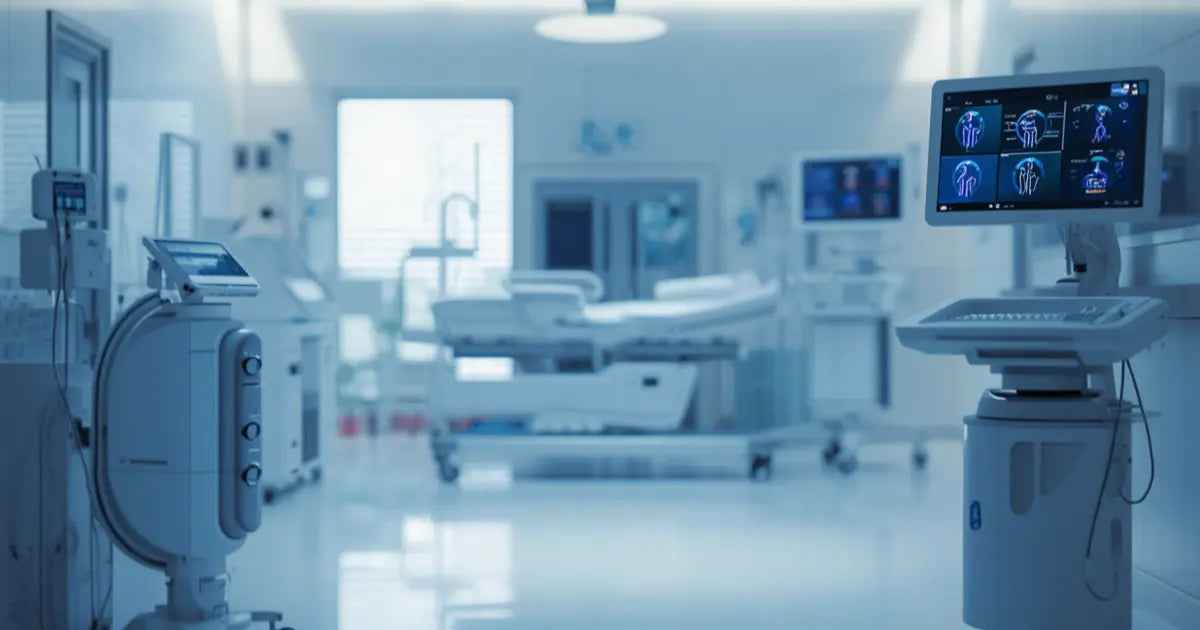
TheInternet of Medical Things (IoMT) is a specialised sub-category of the IoT that focuses specifically on medical devices. In hospitals, this includes devices such as smart infusion pumps or connected beds that track patients’ movements to prevent pressure ulcers.
Benefits of IoMT for healthcare management
IoMT offers optimised healthcare management by seamlessly integrating patient data into hospital systems, thereby improving coordination of care and reducing medical errors.
Criteria for choosing the right technology
Factors to consider for healthcare integration
When integrating these technologies, it is crucial to consider your institution’s specific needs, compatibility with existing systems and ease of use for medical staff.
Comparison of costs and technological implications
| Criteria | IoT | M2M | IoMT |
|---|---|---|---|
| Initial cost | Variable | Often lower | High |
| Maintenance | Moderate | Low | High |
| Scalability | High | Average | High |
Buyers must assess the long-term costs associated with maintenance and scalability, as these factors directly influence profitability and operational efficiency.
Addressing common buyer concerns
Data security and privacy
Data security is a major concern. Ensure that the chosen solutions comply with privacy standards and have robust security protocols in place to protect sensitive patient information.
Warranties and technical support
Opt for suppliers that offer comprehensive warranties and responsive technical support, which is essential for quickly resolving any technical issues and minimising service disruptions.
In conclusion, choosing between IoT, M2M and IoMT depends on your organisation’s specific needs and your technology and budget priorities. To make an informed choice, carefully assess the features, costs and long-term implications of each technology. If you are ready to modernise your healthcare infrastructure, contact our experts for a personalised consultation and discover how these technologies can transform your healthcare services.


Share:
Top 4 Area 1 Plans for Your International Needs
Protecting health data: GDPR Guide