

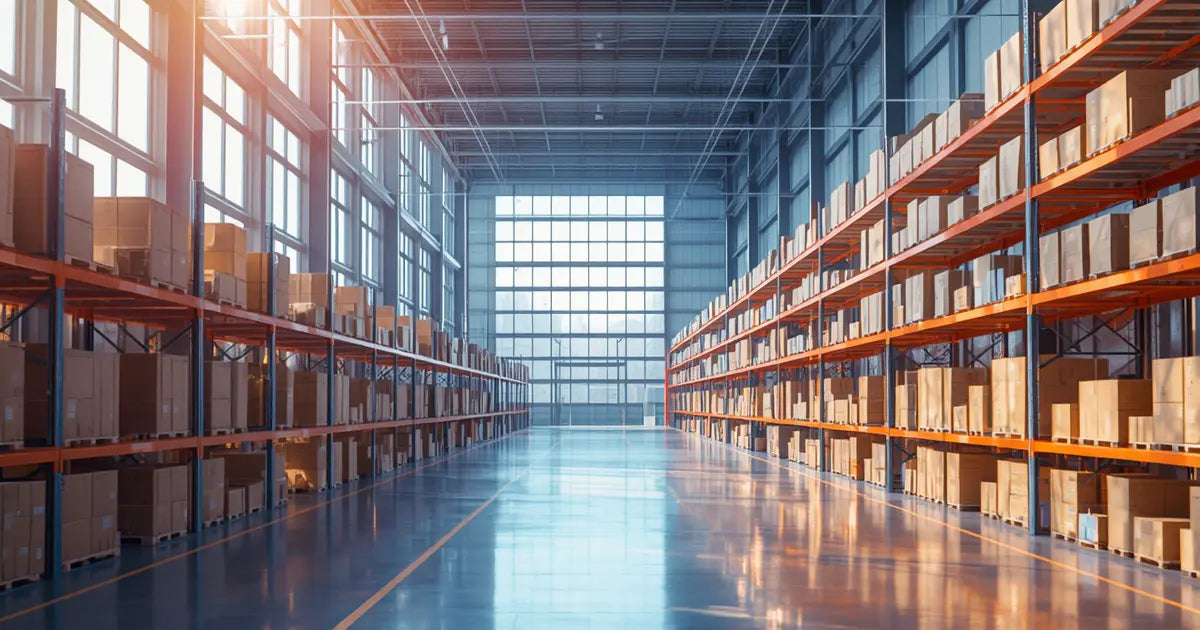
The year 2026 marks a turning point in the world of e-commerce, with smart warehouses becoming essential to meeting growing consumer expectations. Thanks to IoT innovations, these warehouses are transforming modern logistics, offering unrivalled efficiency and precision. As you consider solutions to optimise your supply chain, let’s explore nine IoT innovations that make these smart warehouses possible.
Why smart warehouses are essential for e-commerce
The impact of IoT on modern logistics
IoT technologies are revolutionising logistics by providing real-time visibility across all aspects of the supply chain. With smart sensors and automated systems, warehouses can now monitor and manage stock with greater precision, thereby reducing human error and delays.
Benefits for consumers and businesses
For consumers, this means faster delivery times and improved order tracking. For businesses, smart warehouses help optimise operational costs, improve stock management and boost customer satisfaction. By integrating these technologies, businesses can not only meet current expectations but also prepare for future challenges.
The 9 IoT innovations transforming warehouses
Smart sensors for stock management
Smart sensors play a crucial role in stock management. They enable automatic tracking of stock levels, analysis of consumption trends and the triggering of automatic restocking. This reduces the risk of stock-outs and ensures that products are always available to customers.
Process automation with robots
Automation using robots helps speed up order picking and dispatch processes. These smart machines can move autonomously around the warehouse, select the required items and prepare them for dispatch. This frees up staff for more complex and strategic tasks, thereby increasing overall productivity.
How to evaluate and choose the right IoT technology
Criteria for comparing IoT solutions
When evaluating IoT technologies for your warehouses, it is crucial to consider reliability, scalability, and ease of integration. Prioritise solutions that are compatible with your existing systems and can scale with your business.
Cost and return on investment
The initial cost of IoT technologies can be high, but it is important to focus on the long-term return on investment. Assess how these technologies can reduce operational costs, improve efficiency and potentially increase revenue through greater customer satisfaction.
Common buyer concerns and how to address them
Data security and privacy
Data security is a major concern. Ensure that the chosen IoT solutions offer robust security protocols to protect sensitive information. Privacy must be a priority, with systems ensuring that customer data is not compromised.
Compatibility and integration with existing systems
Integrating new technologies with your existing systems can be complex. Look for solutions that offer broad compatibility and open APIs to facilitate this transition. This will help avoid costly disruptions and ensure smooth operation.
Leveraging smart warehouses for a better customer experience
Faster delivery times
One of the key benefits of smart warehouses is faster delivery times. Thanks to optimised inventory management and advanced automation, your customers can receive their orders more quickly, which builds loyalty and drives repeat sales.
Improved order accuracy
Order accuracy is crucial for customer satisfaction. IoT systems significantly reduce order errors, ensuring customers receive exactly what they ordered. This not only improves the customer experience but also reduces costs associated with returns and complaints.
By integrating these IoT technologies into your operations, you are preparing your business to meet the challenges of modern e-commerce. To turn your warehouse into a competitive advantage, it is essential to invest in the right solutions and ensure they integrate seamlessly. Start exploring these innovations today to transform your logistics and deliver an unrivalled customer experience.




Share:
Top 3 cybersecurity solutions for M2M